
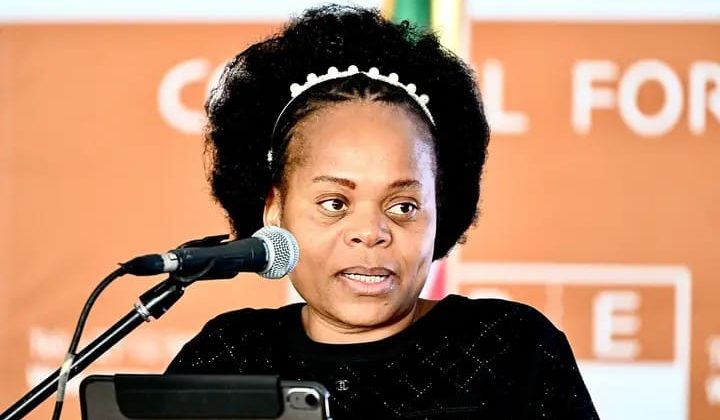
KEYNOTE ADDRESS BY PREMIER DR PHOPHI RAMATHUBA AT THE COUNCIL FOR THE BUILT ENVIRONMENT’S CLIMATE CHANGE INDABA, KALAHARI WATERFRONT NANDONI, VHEMBE DISTRICT
11 September 2025

Programme Director
Deputy Minister of Foresty, Fisheries and the Environment, Hon Bernice Swarts,
Portfolio Committee of the Department of Public Works and Infrastructure Chairperson, Ms Carol Mokgadi Phiri,
Portfolio Committee members,
Limpopo MEC for Public Works, Roads and Infrastructure, Hon Ernest Sebataolo Rachoene,
Limpopo MEC for Economic Development, Tourism and the Environment, Hon Tshitereke Baldwin Matibe,
Members of the Provincial Legislature,
The Speaker, Deputy Speaker,
and Members of the North West Provincial Legislature, led by Hon Desbo Mohono and Hon Collen Maine,
Executive Mayor of Vhembe District Municipality, Cllr Tsakani Freda Nkondo,
Mayor of Thulamela Local Municipality, Cllr Athongozwidivha Rambuda,
Executive Mayor of Fetakgomo Tubatse Local Municipality, Cllr Eddie Edwin Maile,
SALGA National Representative, Executives of the Council for the Built Environment led by Ms Amelia Mtshali and Dr Msizi Myeza,
Senior government executives from all national and provincial departments, entities, and municipalities,
Faith-Based Leaders,
Business Community,
Stakeholders,
Members of the Media,
Ndi matsheloni, Avuxeni, Thobela, Good morning, Goeie môre,
It gives me great joy to welcome you to the majestic Vhembe District, a land where the mighty Limpopo River carves its way through valleys, where sacred mountains stand as guardians of our heritage, and where fertile soils breathe life into our people. Vhembe is not only the heartbeat of our traditions, and culture, but also a reminder of the delicate balance between humanity and nature.
As we gather here today under the banner of the Council of the Built Environment, let us draw wisdom from this land – that in protecting our environment, we safeguard our future, and in confronting climate change, we honour the generations yet to come. Vhembe District is a land of extraordinary beauty, rich heritage, and resilient people, and is also a land that has felt, more than most, the intensifying impacts of climate change.
Programme Director, Vhembe and other districts of our province have experienced prolonged droughts that have threatened food security and rural livelihoods. Flash floods have damaged roads, bridges, and homes. Rising temperatures and erratic rainfall have affected our ecosystems, water sources, and agricultural productivity.
For communities that depend on land and natural resources, these shifts are not abstract scientific debates, they are lived realities that threaten survival. But in the face of these challenges, we have not stood still. We have chosen to adapt, innovate, and lead.
Our province is positioning itself as the cradle of adaptive solutions in land governance and infrastructure development. Through the Department of Public Works, Roads and Infrastructure, we are prioritising climate-smart infrastructure that withstands the pressures of extreme weather.
New roads and bridges are now designed with resilience in mind, ensuring connectivity even during storms. Through partnerships with traditional leaders and communities, we are strengthening land governance, protecting communal lands, improving tenure security, and ensuring that land-use decisions reflect both cultural heritage and modern needs.
Let us continue to work with municipalities, universities, and professional councils, and be on the lead to pioneer locally informed climate adaptation plans, ensuring that development is not only about bricks and mortar but about people, ecosystems, and long-term survival.
As we forge ahead in the built environment, let us invest in youth and women because resilience is not only about infrastructure but also about people who can plan, design, and deliver a future that withstands shocks.
As part of our broader commitment, we are happy that our province has established the Climate Adaptation Working Group, a multi-stakeholder platform bringing together government departments, research institutions, traditional leadership, and civil society partners. This working group has been instrumental in assessing climate risks, developing localised adaptation strategies, and piloting projects across sectors such as agriculture, water management, and infrastructure.
Among its achievements are the integration of climate risk assessments into district development plans, the roll-out of community awareness campaigns on sustainable land use, and the initiation of pilot projects on flood defense mechanisms in vulnerable municipalities. This work ensures that climate adaptation is not an afterthought but a central pillar of our planning and development.
Colleagues, this Indaba could not be timelier. The theme “Adapting for Tomorrow: Land Governance and Infrastructure Development that Supports Resilient Settlements” speaks directly to the challenges and opportunities we face. If we fail to adapt, climate change will undo decades of progress. But if we act together as government, professionals, traditional leaders, civil society, and communities, we can turn risk into resilience and challenge into opportunity.
We all must come to terms with and understand that climate change is no longer a distant threat, but a present reality reshaping our lives. Rising temperatures, floods, and droughts are disrupting livelihoods, food security, and ecosystems. If we do not act with urgency, the cost will be borne by our children and generations to come.
Our province, with its diverse geography and dynamic communities, is a living laboratory for the country. The solutions we forge here in Vhembe can inform national and even continental pathways towards resilience.
Every road we build, every bridge we construct, every settlement we plan must be designed with resilience in mind. Let us recognise that land governance is not just about ownership but about stewardship protecting land for present and future generations.
Partnerships with spheres of government, traditional leadership, the private sector, and most importantly, with the communities who live on the land and use the infrastructure we deliver should be a priority if we want to see a better and resilient province. As a province, we say that our strength lies not only in our soil but in our people, therefore we must work hard to ensure that we come up with solutions to climate change. We are people rooted in resilience, guided by history, and inspired by the future we must build.
Programme Director, as we gather over these two days, may this Indaba be a space where ideas become commitments, and commitments become action. Let the discussions and outcomes inform the future policy that will equip communities with tools needed to co-create sustainable spaces that will promote resilience, social equity, and environmental sustainability. We need to come up with ways that can address the intersection of climate change, disaster management, and socio-economic development.
Together, let us ensure that our province continues to stand as a beacon where resilience is not only rooted, but where it grows, flourishes, and inspires the nation.
I thank you.